 0f72080c56
- workaround for an apparent bug with LOAD address
  generation at offsets >= 3584
- updated bitstream URL
181 lines
9.3 KiB
Markdown
181 lines
9.3 KiB
Markdown
# Tridora-CPU
|
|
The Tridora-CPU is a homebrew CPU written in Verilog and a matching software environment,
|
|
including a Pascal compiler and assembler.
|
|
Everything was created from the ground up (except soldering stuff).
|
|
Everything is as simple as possible while still being reasonably useful.
|
|
Everything is open source, so you can read, understand and modify the whole system, hardware and software.
|
|
|
|
## Overview
|
|
- homebrew CPU written in Verilog implemented on an FPGA
|
|
- 32-bit word-oriented stack machine architecture
|
|
- running at 77 MHz on an Arty-A7 board with four clocks per instruction
|
|
- has its own instruction set architecture, compatible with nothing
|
|
- additional IO controllers on FPGA: UART (serial console), SD-Card, VGA
|
|
- Pascal compiler written from zero
|
|
- CPU and compiler were designed together
|
|
- minimal operating system
|
|
- editor, compiler, assembler run natively
|
|
- so you can develop programs directly on the machine
|
|
- small: CPU has ~500 lines of Verilog, compiler ~9000 LoC
|
|
- compiler written in Pascal and can compile itself
|
|
- cross-compiler/-assembler can be compiled with FPC
|
|
- compiler does its own Pascal dialect with some restrictions and some extensions
|
|
- emulator available [here](https://gitlab.com/slederer/Tridora-CPU/-/tree/main/tridoraemu)
|
|
|
|
The name comes from a certain fictional monster with three heads. The prefix tri- is greek for three, and the Tridora-CPU
|
|
has three stacks instead of just one like almost all other CPUs.
|
|
It also
|
|
has a strange mixture of features from three different eras of computing:
|
|
- a simple instruction set without integer multiply/divide like an 8-bit CPU
|
|
- speed is like a fast 16-bit CPU, also 16-bit instruction words
|
|
- 32-bit word size from the 32-bit era
|
|
|
|
It might remind you of the UCSD-P-System and early Turbo-Pascal versions.
|
|
|
|
Other inspirations were, among others, in no particular order:
|
|
|
|
- the Novix 4016 CPU (a stack machine CPU designed for Forth, mainly by Charles Moore)
|
|
- the J1 CPU by James Bowman (which is not entirely unlike the Novix 4016)
|
|
- the Lilith computer by Niklaus Wirth and his team (a stack CPU designed for Modula-2)
|
|
- the PERQ workstation (also a stack CPU designed for Pascal)
|
|
- the Magic-1 by Bill Buzbee
|
|
- the OPC by revaldinho
|
|
|
|
## October 2025 Update
|
|
This update introduces a data cache for the Tridora-CPU. It is similar to the instruction cache
|
|
as it caches the 16 bytes coming from the DRAM memory controller. It is a write-back cache, i.e.
|
|
when a word inside the cached area is written, it updates the cache instead of invalidating it.
|
|
|
|
This is important because there are many idioms in the stack machine assembly language where you
|
|
store a local variable and then read it again (e.g. updating a loop variable).
|
|
|
|
Since for most programs, the user stack and parts of the heap are inside the DRAM area, the data cache
|
|
has a more noticable impact. In the benchmark program that was already used for the last update,
|
|
the data cache results in a 50% improvement for the empty loop test. This is in comparison to the version
|
|
without data cache but with the instruction cache, both running code out of DRAM.
|
|
|
|
It is also noticable for compile times: With the data cache, compiling and assembling the
|
|
"hello,world" program takes 16 seconds instead of 20. With a little tweak of the SD-Card controller
|
|
that slightly increased the data transfer rate, the build time goes down to 15 seconds.
|
|
|
|
Also, an audio controller was added that allows interrupt-driven sample playback via an AMP2 PMOD.
|
|
|
|
## April 2025 Update
|
|
The clock has been reduced to 77 MHz from 83 MHz. Apparently the design was at the limit and
|
|
timing problems were cropping up seemingly at random. Reducing the clock speed made some
|
|
enhancements and bugfixes possible. Also, the project files work with Vivado 2024 now.
|
|
|
|
Most importantly, the Tridora-CPU now has an instruction cache with a size of 16 bytes or eight instructions.
|
|
This increases execution speed when running code out of DRAM (that is, above 64KB). In a simple
|
|
benchmark program, the CPU is about twice as fast.
|
|
Many programs fit into the lower 64KB of RAM, which can be accessed without latency, and will
|
|
have no noticable speed increase.
|
|
|
|
There have also been a number of bug fixes for the compiler and some for the assembler. This makes
|
|
compiling even larger and more complex programs possible. An example of this is ECL-Rogue, a variant of Rogue written
|
|
Pascal, which has been ported to Tridora-Pascal and is now included
|
|
on the emulator image.
|
|
|
|
## Links/Downloads
|
|
- the [source repository](https://gitlab.com/slederer/Tridora-CPU)
|
|
- the [Hackaday project](https://hackaday.io/project/198324-tridora-cpu) (mostly copy-paste from this README)
|
|
- the [YouTube channel](https://www.youtube.com/@tridoracpu/videos) with some demo videos
|
|
- the [emulator](https://git.insignificance.de/slederer/-/packages/generic/tridoraemu/0.0.5/files/12) (source and windows binary)
|
|
- the [FPGA bitstream](https://git.insignificance.de/slederer/-/packages/generic/tdr-bitstream/0.0.4/files/16) for the Arty-A7-35T board
|
|
- an [SD-card image](https://git.insignificance.de/slederer/-/packages/generic/tdr-cardimage/0.0.4/files/13)
|
|
|
|
Contact the author here: tridoracpu [at] insignificance.de
|
|
|
|
You can also open a ticket on Gitlab or send a message on Hackaday.
|
|
|
|
## Demos
|
|
### Videos
|
|
|
|
|Compiling and Running "Hello World"|Moving Lines Demo|
|
|
|---|---|
|
|
[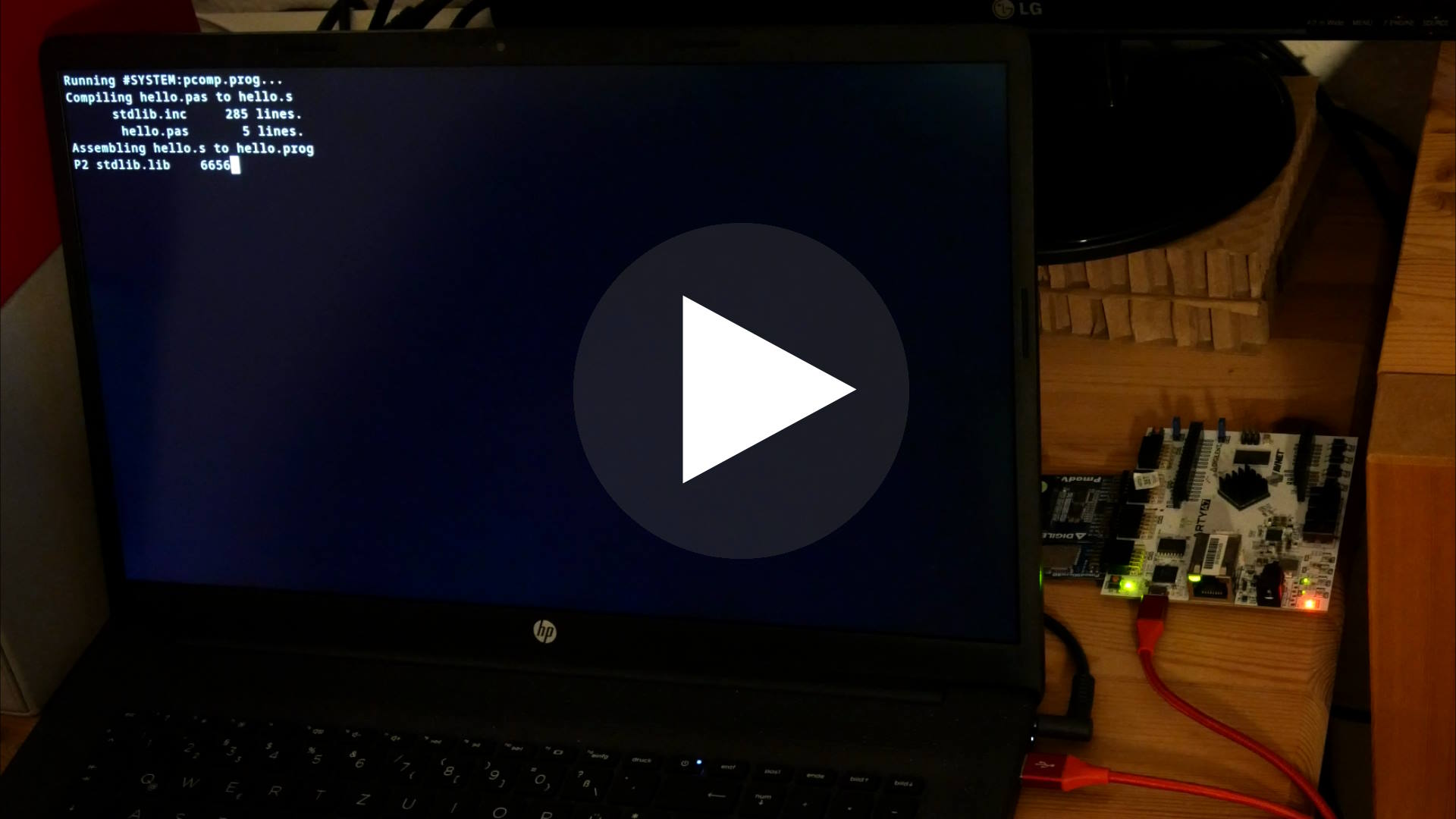](https://youtu.be/JXUnOOe_fVg)|[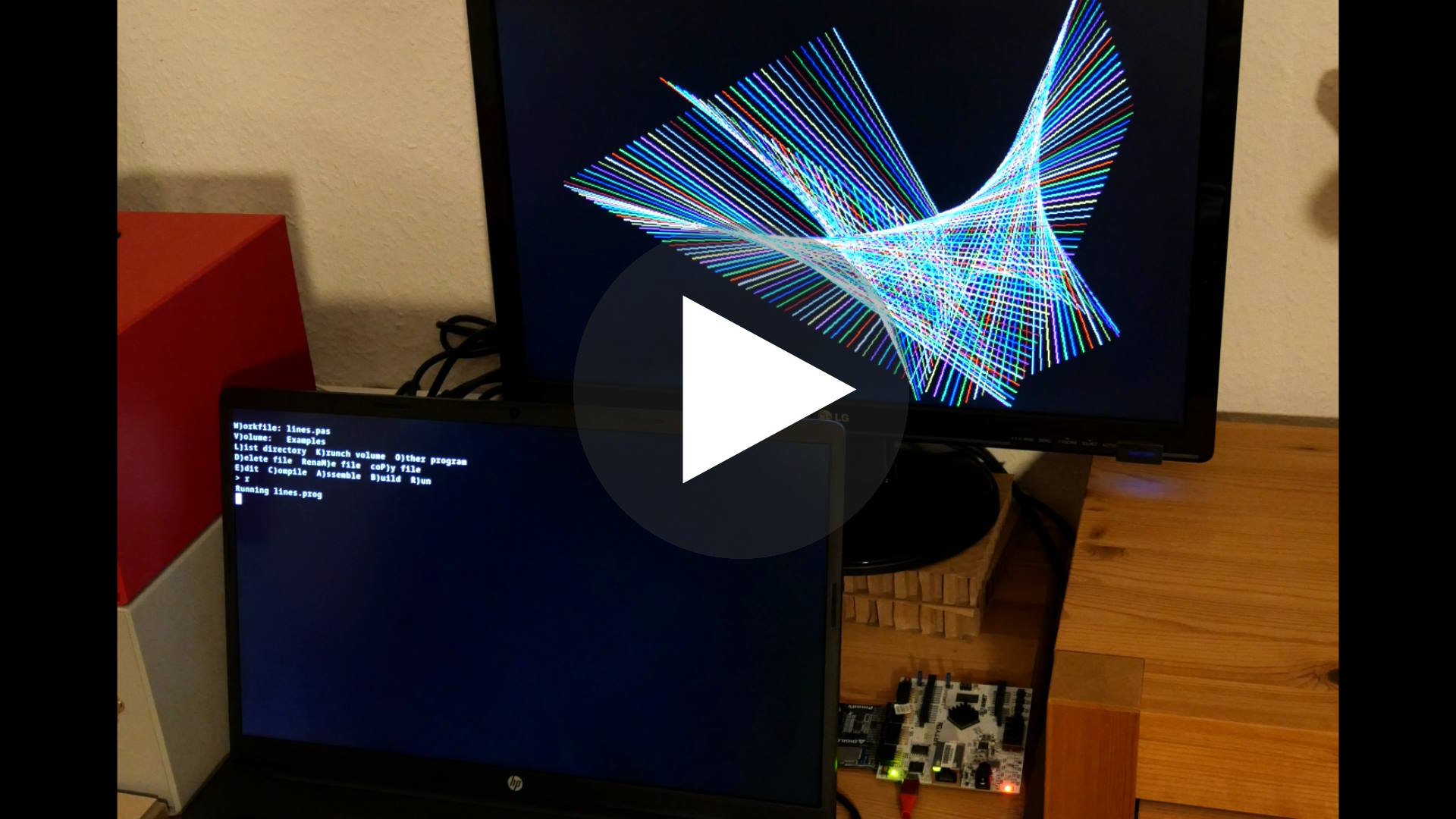](https://youtu.be/Y8Bx2Bsyu88) |
|
|
|
|
### Pictures
|
|
|
|
|Mandelbrot|Image Viewer|Game of Life|
|
|
|---|---|---|
|
|
|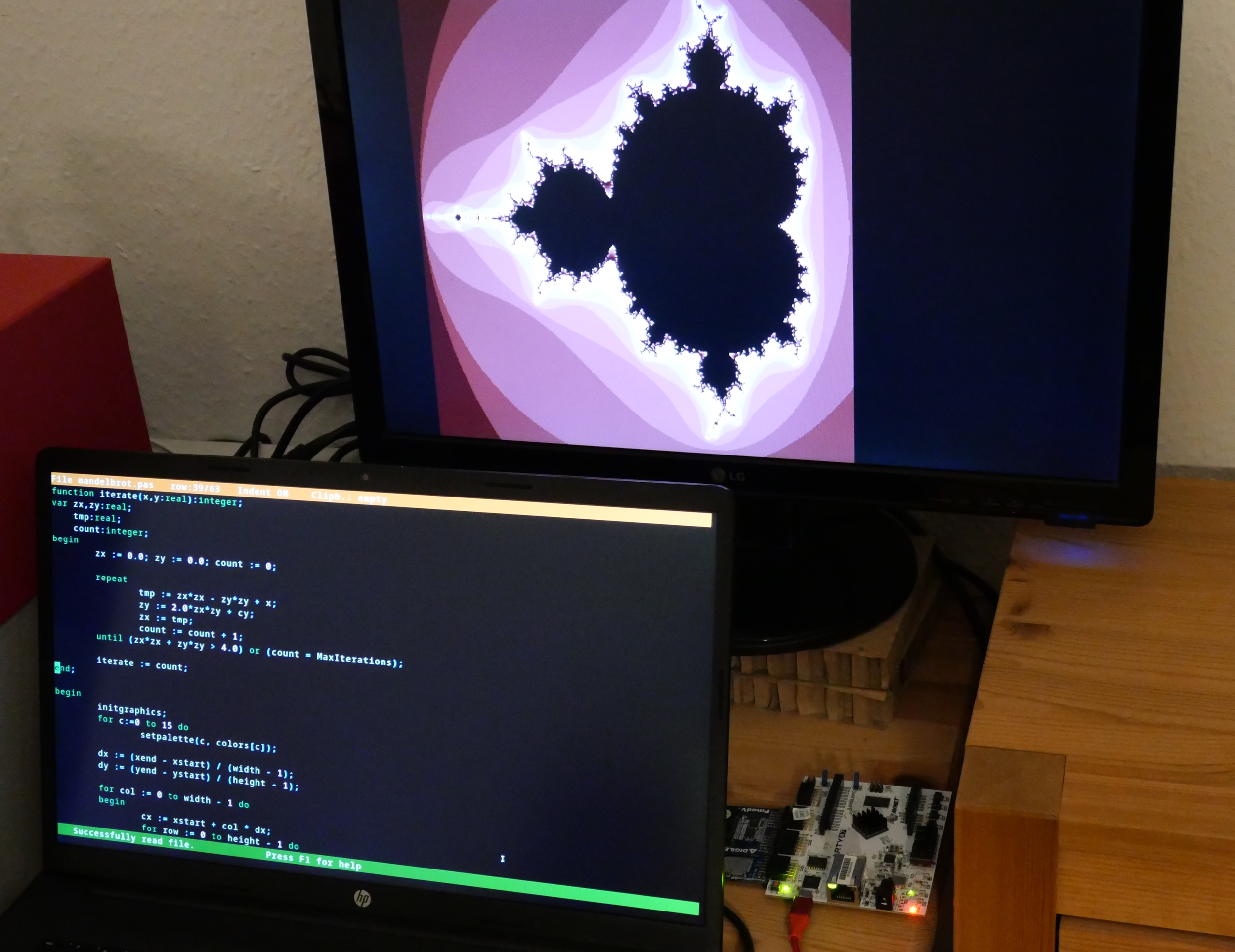| 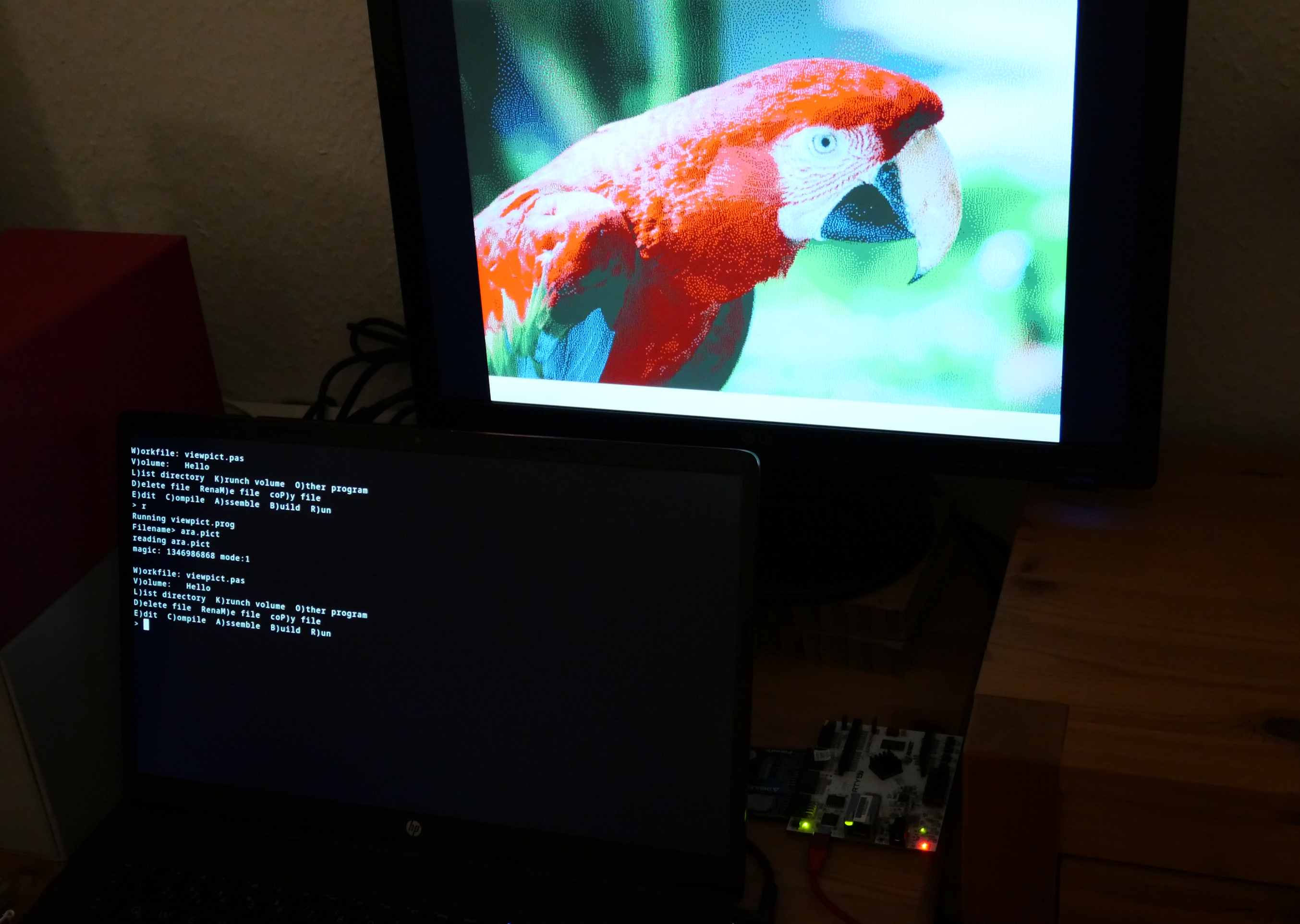 | 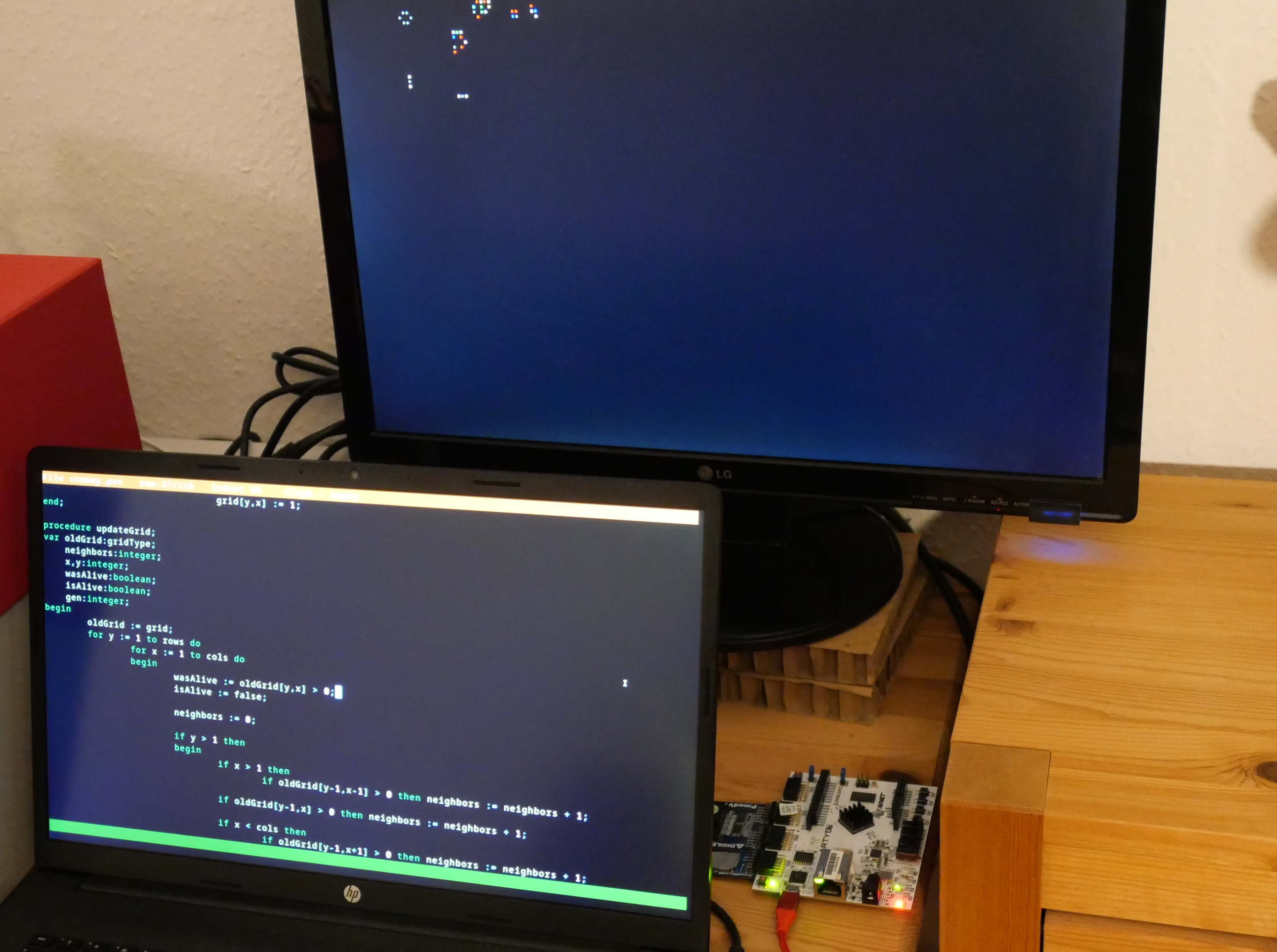 |
|
|
|
|
## Supported FPGA Boards
|
|
### Arty-A7-35T
|
|
At the moment, the only supported board is the Digilent Arty-A7-35T.
|
|
|
|
Two Pmods are used for a complete system:
|
|
|
|
- the Digilent MicroSD Pmod at the JA connector
|
|
- the Digilent VGA Pmod at the JB and JC connectors
|
|
|
|
As the Arty-A7-35T is no longer in production, it should be easy to
|
|
use the Arty-A7-100T instead, but this has not been tested yet.
|
|
|
|
Other boards under consideration are the Digilent Nexys-A7 and the Arty-S7.
|
|
|
|
## Pascal Language
|
|
- Wirth Pascal
|
|
- no function types/parameters
|
|
- arbitrary length strings (2GB)
|
|
- safe strings (runtime information about max/current size)
|
|
- tiny sets (machine word sized), that means no SET OF CHAR
|
|
- array literals with IN-operator, which can replace most uses of SET OF CHAR
|
|
- nested procedures
|
|
- 32 bit software floating point with low precision (5-6 digits)
|
|
- break and exit statements, no continue yet
|
|
- static variable initialization for global variables
|
|
- non-standard file i/o (because the standard sucks, obl. XKCD reference)
|
|
|
|
## Standard Library
|
|
- everything from Wirth Pascal
|
|
- some things from TP3.0
|
|
- some graphics functionality (to be expanded in the future)
|
|
|
|
## Operating System
|
|
- not a real operating system, more of a program loader
|
|
- some assembly routines for I/O resident in memory
|
|
- one program image loaded at a time at a fixed address
|
|
- most parts of the operating system are contained in the program image
|
|
- file system is very primitive: only contiguous blocks, no subdirectories
|
|
- simple shell reminiscent of TP3.0, edit, compile, run programs
|
|
|
|
## Building the Compiler
|
|
- you need to have _FPC_ and _Python3_ installed
|
|
- on Linux, you need _make_ installed
|
|
- in the **pcomp** directory, run **make** (or **make.bat** on Windows)
|
|
- on Linux, you can also run **make nativeprogs** and **make examples**
|
|
|
|
## Getting the ROM image
|
|
- there are two formats for the ROM image, one for the emulator (**rommon.prog**) and one for building the FPGA bitstream (**rom.mem**)
|
|
- to get the **rommon.prog** file, either copy it from the _tridoraemu_ package file or build it
|
|
- for **rom.mem** and **rommon.prog**, find both files in the **lib** directory after running **make nativeprogs** (or **make.bat**) in the **pcomp** directory (see above)
|
|
|
|
## Building the FPGA bitstream
|
|
- install Vivado (April-2025-Update tested with 2024.2)
|
|
- install the package for your board in Vivado (Tools -> Vivado Store -> Boards)
|
|
- copy the ROM image (**rom.mem**) into the **tridoracpu** directory (see above)
|
|
- start Vivado and open the project file **tridoracpu.xpr** in the **tridoracpu** directory
|
|
- run synthesis, implementation and bitstream generation (Flow -> Generate Bitstream)
|
|
- program your device (Flow -> Open Hardware Manager), the bitstream file should be in **tridoracpu/tridoracpu.runs/impl_1**
|
|
- the bitstream file for (temporarily) programming your device is named **top.bit**, the file for flashing your device is named **top.bin**
|
|
|
|
## Running the Emulator
|
|
See the emulator [README](tridoraemu/README.md).
|
|
|
|
## Documentation
|
|
- [Instruction Reference](doc/tridoracpu.md)
|
|
- [Memory Layout](doc/mem.md)
|
|
- [UART](doc/uart.md)
|
|
- [SD-Card controller](doc/spisd.md)
|
|
- [VGA controller](doc/vga.md)
|
|
- [Using the Shell](doc/shell.md)
|
|
- [The Mostly Missing Pascal Programming Guide](doc/pascalprogramming.md)
|
|
|
|
More documentation is coming, as time permits.
|
|
|
|
## Credits
|
|
The Tridora-CPU uses the UART from the J1 CPU by James Bowman (*uart.v*), see https://github.com/jamesbowman/j1
|
|
|
|
The VGA framebuffer uses code from Project F by Will Green, see https://projectf.io
|